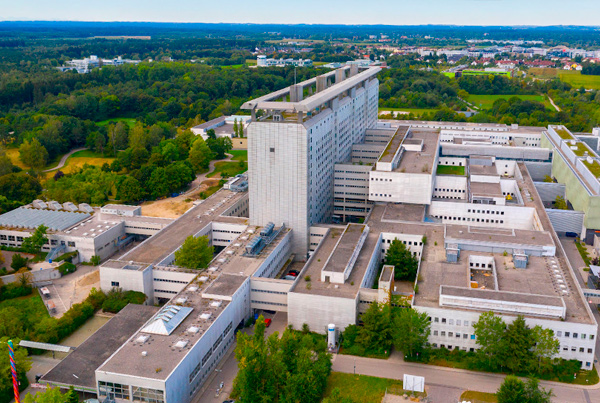
Organization of treatment and rehabilitation in Germany.
Complete medical support.
Complete medical support.





+49 176 17917001
All departments

Stomach cancer is an oncological disease in which malignant tumors form on the mucous membranes of this organ. The pathology is considered one of the most difficult because it is poorly diagnosed. For a long time, it provokes symptoms that can easily be mistaken for an exacerbation of gastritis or peptic ulcer disease. The pathology is aggressive, but with a competent approach, it responds successfully to therapy.
Trust your health to German specialists. Stomach cancer treatment in Germany is a real chance for recovery. Oncological clinics in Bavaria and Munich are currently considered leaders in the number of favorable outcomes. The average chance of successful treatment is 75%.
In stomach cancer, in 95% of cases, epithelial glandular cells undergo pathological changes. According to statistics, the disease most often develops between the ages of 40-70 years. At the same time, men get sick 1.7 times more often than women. Therapy is complicated not only by difficulties at the diagnostic stage but also by the rapid development of the disease. Not only the stomach can be affected in patients. Metastases grow into neighboring organs of the digestive system — intestines, pancreas, and with the bloodstream reach the lungs and liver.
The exact causes of stomach oncology have not yet been established. The list of factors that increase the risk of tumor formation includes:
It is known that genetic predisposition also plays a role. The risk of developing malignant tumors in patients with a burdened heredity is higher than in people whose relatives have not encountered oncological diseases.

In the early stages, stomach cancer does not manifest itself in any way, which makes diagnosis difficult. Patients seek medical help when the tumor grows into the submucosal layers. This is accompanied by pronounced symptoms.
The main signs of cancer are:
As the disease progresses, new symptoms appear. Due to the rapid growth of the tumor, a false feeling of satiety occurs. Damage to the mucous membranes provokes the appearance of blood in the vomit. Loss of appetite, anemia, intoxication of the body — all this leads to rapid fatigue and chronic weakness.
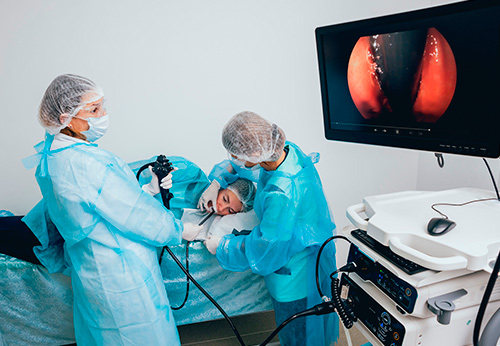
Typical symptoms can be a reason for examination. The diagnosis of «cancer» is made not according to the clinical picture, but based on the study of a biopsy specimen — a tissue sample from the inner surface of the stomach taken during a biopsy. As a rule, patients come to German clinics with existing results, but if necessary, a repeat procedure or re-examination of existing histological preparations can be performed in Germany.
To clarify the stage of the disease, the size of the tumor, and the presence of metastases in other organs, a number of diagnostic procedures are performed in Germany. Available to patients:
Diagnostics also involves taking tests. The patient's blood is tested for tumor markers synthesized by malignant tumor cells. Additionally, general and biochemical blood tests and a general urinalysis are performed to assess the condition of the body and its readiness for treatment.
Stomach cancer treatment is a long process that usually takes place in several stages. Various methods are practiced in oncological centers in Germany — chemotherapy, surgical treatment, innovative techniques. A comprehensive approach is possible. The course of action is determined by the attending physician, taking into account the stage of the disease, the rate of tumor growth, and the patient's well-being.

Germany is a country where the emphasis is on organ-preserving operations. Total gastrectomy is performed only in extreme cases when a council of doctors decides that other methods are ineffective. If the tumor is operable and neighboring organs are not affected by metastases, it is locally removed.
In German clinics, it is possible to perform surgical intervention using an open method, but minimally invasive operations with an accelerated recovery period are actively practiced:
Operations to remove malignant neoplasms are performed under medical sleep. Preliminarily, a course of chemotherapy may be performed to reduce the size of the tumor.
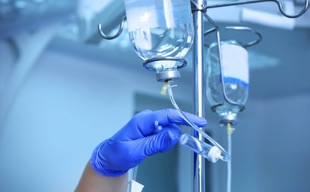
The patient receives intravenous medications that inhibit tumor growth. As a rule, combinations of several drugs are used. The drugs are quite aggressive, so they can cause side effects — nausea, vomiting, hair loss. The condition of the patient undergoing chemotherapy is constantly monitored by clinic staff.
An alternative to traditional chemotherapy is targeted therapy. In this case, drugs that block the growth of cancer cells are used, but they are not administered intravenously. The drugs are embedded in liposomes — physiological carriers of various compounds. The substances are distributed throughout the body and reach directly to the lesion focus. There is no negative effect on healthy tissues.
Another method of delivering anticancer drugs is chemoperfusion. Substances are introduced directly to the lesion focus by washing the abdominal cavity. The dose of active components here is higher than with intravenous administration. To avoid affecting neighboring organs, mechanical barriers are set and blood vessels are temporarily clamped.

Germany is a country with wide opportunities in the treatment of stomach cancer. Advanced technologies are actively used here, allowing to deal with neoplasms without surgical intervention and aggressive medications.
Patients of German clinics have access to innovative radiation methods. They differ from traditional radiation therapy by targeted action on atypical cells. Good results are achieved by patients who have completed a 3D-CRT course. This is a technique in which the body is irradiated from different angles. An alternative option is IMRT. This is irradiation with the ability to adjust intensity during the session. Both methods are effective and safe.
The equipment of German clinics allows to abandon radiation and use an innovative method — proton therapy. The tumor is destroyed under the influence of ionizing particles. The advantages of this approach:
Another promising treatment method in Germany is gene therapy. This type of treatment is aimed at correcting the patient's genotype. Atypical cells are isolated from the body, modified in culture, and then reintroduced. In cancer, tumor markers and suppressor genes are affected.
Innovations have also touched on surgical methods. In Germany, the experimental NOTES method is available — laparoscopy without incisions. Access to the tumor location is through the navel — a healed natural opening.
The cost for each patient is individual. It consists of several parameters:
The approximate cost of treatment with different methods is shown in the table.
| Service Name | Price, € | Additional |
|---|---|---|
| Diagnostics | 2100 | 3 days outpatient |
| Total gastrectomy | 18000 | 5 days inpatient |
| Partial gastrectomy | 9800 | 5 days inpatient |
| Chemotherapy | from 1200 | per cycle |
Cancer treatment in Germany means highly qualified surgeons, oncologists and related specialists, comfortable conditions, a full range of services from initial diagnosis to rehabilitation.
Advantages of therapy in German medical centers:
Before treatment in Germany, you can get a remote expert assessment of your case. To do this, prepare and send us all available extracts and test results. We will forward them for review to German specialists. If necessary, we will organize a consultation of leading oncologists. We will send you an accurate cancer treatment plan that will be drawn up by qualified doctors. Our company takes care of all organizational issues.
High-precision research methods

Comprehensive approach to treatment
New surgical techniques

Low complication rate

Treatment of complex cases
High therapy effectiveness
High-precision research methods
Comprehensive approach to treatment
New surgical techniques
Low complication rate
Treatment of complex cases
High therapy effectiveness
 +49 176 17917001
Or send us a message: