Organization of treatment and rehabilitation in Germany.
Complete medical support.
Complete medical support.




+49 176 17917001
All departments
Leading German specialists from Munich clinics will independently and free of charge select treatment options based on medical documents
Задачей инновационной медицины является разработка целостных решений по профилактике, диагностике, терапии и реабилитации заболеваний и ограничения функций организма. Для достижения этой цели – сделать жизнь людей лучше –осуществляется работа на различных уровнях знаний как медицинских дисциплин, так и современных IT-технологий, и развития индустрии.
Инновационная медицина учитывает индивидуальные особенности людей и адаптирует терапевтические концепции лично к каждому пациенту.
Многие открытия и разработки, казавшиеся фантастичными лишь пару десятилетий назад, сегодня являются обыденностью и часто стандартом современной медицины.
You send medical documents.
Medical managers will prepare a package of documents, translate them into German and send them to several clinics in Munich.
Specialized specialists will review documents and examination results and offer you classic or innovative methods for treating orthopedic diseases
You receive a proposal and treatment estimate. If necessary, our company will select a hotel with a convenient location and a professional interpreter for you.

After treatment ends, we will help you maintain contact with the doctor.
You can always get the necessary consultation on rehabilitation and treatment
You send medical documents.
Medical managers will prepare a package of documents, translate them into German and send them to several clinics in Munich.
Specialized specialists will review documents and examination results and offer you classic or innovative methods for treating orthopedic diseases
You receive a proposal and treatment estimate. If necessary, our company will select a hotel with a convenient location and a professional interpreter for you.
After treatment ends, we will help you maintain contact with the doctor.
You can always get the necessary consultation on rehabilitation and treatment
We offer a new service "second opinion" - to make a decision about treatment in Munich clinics, you can consult with a doctor online in advance (Skype, Zoom)
Minimally invasive methods:
micro-invasive biological regenerative autologous reconstruction
minimally invasive
Use of gentle minimally invasive access techniques. Surgical methods do not affect muscles, tendons and nerves. The rehabilitation process is accelerated.
Surgical entry is made through several incisions from 4 mm to 6-8 cm, depending on the type of joint surgery.
Micro-invasive intervention
Performed without incision through a small puncture, which allows outpatient treatment. Surgery is performed without general anesthesia. Surgery conditions ensure high effectiveness of regenerative concentrates, which accelerates the restoration of damaged tissues and reduces the recovery period to a minimum. The patient maintains physical activity.
Surgical entry is made through punctures of 0.3 - 1.5 mm while fully preserving tissue integrity.
Robot-assisted surgeries.
Intraoperative monitoring systems.
Navigation systems for surgeries.
Entry precision and visual control through the Cyber Navi Hand TM navigation system. The developed and patented system ensures maximum precision of access to damaged structures.
inpatient
Anesthesia and post-operative medication (painkillers and antibiotics) are used.
outpatient
General anesthesia is not used. Local anesthesia. In the first three days after intervention, anti-inflammatory and pain-relieving medications are recommended.
Rehabilitation program developed by clinics taking into account individual patient characteristics. Physiotherapist supervision is required.
Regular medical examination and follow-up imaging as indicated.
Rehabilitation is not required. Load recommendations are given - the patient leaves the clinic independently.
After 8-16 weeks, monitoring (MRI, CT, X-ray) is performed to confirm the success of surgical intervention.
Advanced age.
Excess weight.
Presence of chronic diseases.
Cardiovascular system problems.
Applied without restrictions. Regeneration occurs at any age.


In making correct diagnosis
Correct diagnosis is 50% of successful disease treatment. An incorrect diagnosis means no result in treatment, which can lead to complications and further disease progression.

In choosing highly professional doctors
The decisive factor for successful treatment is the high professionalism of the doctor. German specialists receive excellent medical education, constantly improve and have access to the most modern equipment and materials. Knowledge, the latest equipment and treatment protocols – all in the hands of the doctor.

In latest generation medical equipment
German medicine is a flagship in the field of research. Germany has established production of almost a full range of diagnostic and treatment equipment.

In quality of care and rehabilitation
German clinics pay great attention to patient comfort to create conditions for quick recovery. Rehabilitation takes into account the individual characteristics of the patient, which allows achieving excellent results
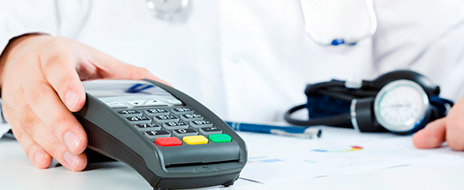
In price-quality ratio
Treatment in German clinics includes everything a patient needs before, during and after treatment. Pricing in Germany is based on the DRG system – the cost of treatment is formed taking into account the risk group, disease stage and concomitant diseases. Compared to Israel, prices in German clinics are lower. Prices in Israel include a reduced list of services, which upon discharge leads to a higher treatment cost than in Germany.
Strict standards for equipment and treatment methods.
The main indicator of the success of the German approach to treatment is 81 years of average life expectancy of German residents. For comparison, this indicator in Russia is 70.5 years.
In making correct diagnosis
Correct diagnosis is 50% of successful disease treatment. An incorrect diagnosis means no result in treatment, which can lead to complications and further disease progression.
In choosing highly professional doctors
The decisive factor for successful treatment is the high professionalism of the doctor. German specialists receive excellent medical education, constantly improve and have access to the most modern equipment and materials. Knowledge, the latest equipment and treatment protocols – all in the hands of the doctor.
In latest generation medical equipment
German medicine is a flagship in the field of research. Germany has established production of almost a full range of diagnostic and treatment equipment.
In quality of care and rehabilitation
German clinics pay great attention to patient comfort to create conditions for quick recovery. Rehabilitation takes into account the individual characteristics of the patient, which allows achieving excellent results
In price-quality ratio
Treatment in German clinics includes everything a patient needs before, during and after treatment. Pricing in Germany is based on the DRG system – the cost of treatment is formed taking into account the risk group, disease stage and concomitant diseases. Compared to Israel, prices in German clinics are lower. Prices in Israel include a reduced list of services, which upon discharge leads to a higher treatment cost than in Germany.
Strict standards for equipment and treatment methods.
The main indicator of the success of the German approach to treatment is 81 years of average life expectancy of German residents. For comparison, this indicator in Russia is 70.5 years.
The price is formed before departure to Germany based on medical documents provided by the patient. We try to form the most accurate treatment or diagnostic proposal and try to present opinions of several specialists on the medical problem.
We will provide information about the rating of the medical institution and the status of the doctor. The choice also depends on the type of disease. For one category of diseases, it is better to choose a multidisciplinary clinic, for another — a specialized one.
We do not provide such services directly. However, we can recommend a hotel and help organize a transfer to the clinic or to the airport. We will help with obtaining a medical visa. We will provide an interpreter for individual accompaniment.
In many cases, yes. Many clinics in Russia now have good equipment, and if there is a quality image, there is no need to repeat the MRI. The examination is transmitted to a German radiologist for a professional conclusion.
The rehabilitation plan is developed taking into account the individual needs of the patient. The physiotherapist will show how to perform exercises correctly and will adjust the program if necessary.
After 7 days, rehabilitation can be continued outside the clinic, on an outpatient basis. The rehabilitation period is approximately 3 weeks, depending on the complexity of the operation. German specialists have developed their own rehabilitation programs based on innovative concepts, taking into account the accumulated practice of patient recovery after endoprosthetics.
As a rule, by the 6th week after surgery, many patients are already driving a car, and after 12 weeks – they return to work.
For our clients, we can organize rehabilitation not only in Germany, but also in Moscow.



 +49 176 17917001
Or send us a message: